Vodič za rubne trake: Što trebate znati prije rezanja

Rubna traka tanka je vrpca PVC-a, ABS-a, furnira pravog drva ili masivnog drva koja se nanosi na izložene rubove pločastih materijala poput šperploče, MDF-a i iverice. Skriva sirovu jezgru, brtvi je od vlage i daje ploči gotov, tvornički čist izgled. Jednu stvar morate raščistiti prije rezanja: traka sjeda povrh ploče, pa je gotovi dio širi i viši od komada koji izrežete. Ako je traka debela 1 mm ili više, oduzmite je od dimenzija rezanja na svakom obrubljenom rubu, ili će dio ispasti prevelik.
Upravo na tom jednom pravilu počinje većina pogrešaka s rubnim trakama. Ovaj vodič pokriva pet vrsta traka i kada koju koristiti, točno koje rubove obrubiti na tipičnom ormaru, matematiku krojne liste razrađenu na stvarnim brojevima, postupak nanošenja koji stvarno drži i pogreške koje ljude koštaju potraćene ploče ili vrata koja se ne daju zatvoriti.
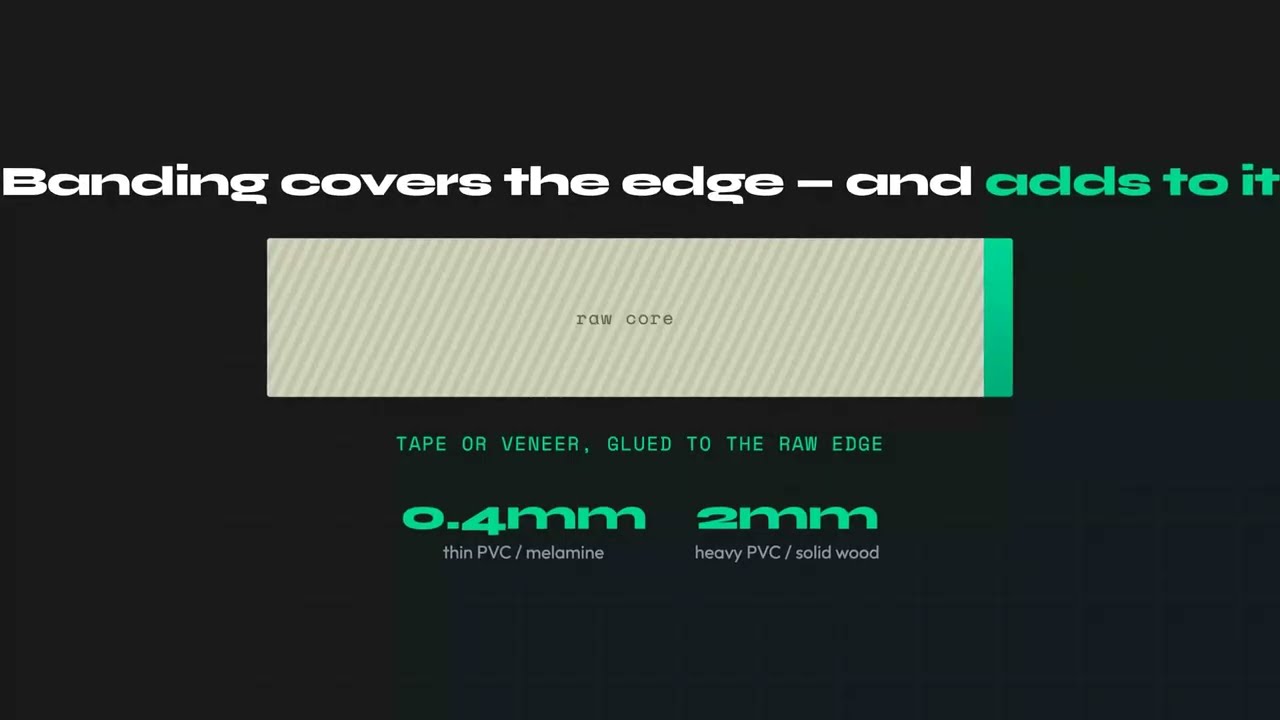
Zašto je rubna traka važna
Sirovi rubovi pločastih materijala nisu samo neugledni — oni su funkcionalna slaba točka. Jezgra šperploče, MDF-a i iverice porozna je i nezaštićena. Ako ostane izložena, vlagu upija izravno iz zraka, a u kuhinji ili kupaonici to znači bubrenje, raslojavanje i s vremenom spužvast rub koji se okrhne čim ga udarite. Iverica je najgori prijestupnik: kad jezgra jednom upije vodu, više se nikad ne oporavi.
Traka brtvi tu jezgru i daje vam rub koji se slaže s licem ploče. U izradi ormara to nije nadogradnja, nego osnova koju očekuje svaki klijent i svaki građevinski standard. Melaminom obložene ploče često stižu tvornički obrubljene na svoja dva duga tvornička ruba, no u trenutku kad napravite uzdužni ili poprečni rez, stvarate svježe sirove rubove kojima treba vlastita traka. Imajte to na umu dok planirate krojnu listu za kuhinjske ormare: svaki rez nova je odluka o rubu, a ne samo novi dio.
Usporedba 5 vrsta rubnih traka
Postoji pet uobičajenih obitelji rubnih traka. Prava ovisi o trajnosti, izgledu, budžetu i o tome posjedujete li stroj za nanošenje rubnih traka ili glačalo. Evo kako stoje jedna prema drugoj.
| Vrsta | Tipična debljina | Ljepilo | Najbolja za | Utječe li na mjeru rezanja? |
|---|---|---|---|---|
| PVC / melaminska traka na glačalo | 0,4–0,8 mm | Tvornički naneseno taljivo ljepilo | Sam svoj majstor, male radionice, većina ormara | Ne (zanemarite je) |
| Furnirska traka s nanesenim ljepilom | 0,5–0,6 mm | Tvornički naneseno taljivo ljepilo | Šperploča koju želite uskladiti s drvenim licem | Ne (zanemarite je) |
| PVC / furnirska traka bez ljepila | 1–3 mm | Sami nanosite kontaktno ili PVA ljepilo | Rubovi izloženi trošenju, bolja otpornost na udarce | Da |
| Letvica od masivnog drva | 3–6 mm+ | PVA, uz stezanje | Vrhunski namještaj, glodani/profilirani rubovi | Da (znatno) |
| ABS (strojna) traka | 0,4–3 mm | EVA ili PUR na stroju | Proizvodne radionice, specifikacije bez klora | Ovisi o debljini |
PVC ili melaminska traka na glačalo radni je konj. Dolazi u rolama s tvornički nanesenim taljivim ljepilom, dostupna je u stotinama boja i dezena imitacije drva, a s 0,4 do 0,8 mm dovoljno je tanka da je iz matematike rezanja potpuno izostavite. Za nanošenje je dovoljno obično kućno glačalo.
Furnirska traka s nanesenim ljepilom pravo je drvo, nanosi se na isti način i pravi je izbor kad želite da se rub šperploče doima kao masivno drvo. Osjetljivija je od PVC-a i trga se ako obrezujete nepažljivo, pa se pravi dvostrani obrezivač ovdje brzo isplati.
Trake bez ljepila od 1 do 3 mm daju čvršći rub, ali ih lijepite sami i počinju biti dimenzijski važne. Letvica od masivnog drva trajna je opcija za fini namještaj koju možete blanjati u ravninu i profilirati glodalicom — a s 3 do 6 mm po rubu dominira vašom krojnom listom. ABS je industrijska alternativa PVC-u bez klora, gotovo uvijek se nanosi automatskim strojem s EVA ili PUR ljepilom u proizvodnoj radionici.
Kako rubna traka mijenja vašu krojnu listu
Ovo je dio na kojem se ljudi spotiču, pa budimo konkretni. Traka se dodaje na ploču, pa je gotova dimenzija veća od dimenzije rezanja. Ako nacrt traži policu široku 500 mm, a vi je izrežete na 500 mm pa obrubite oba kraja, polica na kraju bude šira od 500 mm i više ne stane u svoj otvor.
Umjesto toga računajte unatrag od gotove mjere. Uzmimo policu gotove širine 500 mm, obrubljenu na oba kraja:
- Gotova širina: 500 mm
- Letvica od masivnog drva, 2 mm po kraju: širina rezanja = 500 - 2 - 2 = 496 mm
- Letvica od 6 mm po kraju: širina rezanja = 500 - 6 - 6 = 488 mm
- Standardna traka na glačalo od 0,5 mm: širina rezanja = 500 - 0,5 - 0,5 = 499 mm
Obrazac je jednostavan: oduzmite debljinu trake jednom za svaki obrubljeni rub duž te dimenzije. Dio obrubljen na oba duga ruba gubi debljinu trake dvaput od širine; dio obrubljen sa sve četiri strane gubi je dvaput od širine i dvaput od duljine. Razlika od 1 mm kod trake od 0,5 mm unutar je tolerancije normalnog reza stolnom pilom, i zato vrijedi praktično pravilo: kompenzirajte samo kad je traka debela 1 mm ili više. Ispod toga režite na gotovu mjeru i pustite da traka nestane u vašoj granici pogreške.
Zamka je napraviti ovu kompenzaciju na nekim dijelovima, a na drugima je zaboraviti — ili dimenziju podijeliti neravnomjerno. Ako je bočna stranica ormara obrubljena samo na prednjem rubu, oduzmite traku jednom od dubine, a ne i od dubine i od širine. Miješanje tanke trake na nekim rubovima s debelom letvicom na drugima u istom projektu mjesto je gdje ručno izračunate krojne liste tiho pođu po zlu — bliski je to rođak pogrešaka iz našeg pregleda čestih pogrešaka u krojnim listama.
Još se dvije postavke u radionici isprepliću s trakom. Vaš propil pile i dalje jede materijal između dijelova na ploči i zaseban je odbitak, neovisan o traci — nemojte ih miješati. A ako koristite furnirsku traku od pravog drva, smjer vlakana je važan: pustite da vlakna trake teku u istom smjeru kao furnir lica, tako da rub djeluje kao jedna neprekinuta površina. To ne mijenja nijednu dimenziju, ali mijenja koju rolu kupujete i kako orijentirate ostatke trake.
Automatski uračunajte rubnu traku
Postavite debljinu trake i odaberite koji su rubovi obrubljeni. CutPlan za vas prilagođava svaku dimenziju rezanja, pa dijelovi silaze s pile u pravoj mjeri iz prvog pokušaja.
Otvori optimizator →Koji rubovi doista trebaju traku
Traku trebaju samo rubovi vidljivi na gotovom komadu. Sve što je skriveno uza zid, zakopano iza sokla ili spojeno u drugu ploču može ostati sirovo — obrubljivanje toga troši traku i vrijeme, a ponekad pokvari lijepljeni spoj. Evo karte, komponentu po komponentu, za standardni donji ormar.
| Komponenta | Obrubite ove rubove | Ostavite sirovo |
|---|---|---|
| Bočne stranice | Prednji rub | Stražnji, gornji, donji (skriveni ili spojeni) |
| Podesive police | Prednji rub (oba kraja po želji) | Stražnji rub |
| Fiksne police / dno | Prednji rub | Stražnji rub i krajevi (uglavljeni u utor) |
| Vrata i fronte ladica | Sva četiri ruba | Ništa |
| Sokl / podnožje | Gornji rub (ako se vidi) | Donji rub, krajevi |
| Fiksna stražnja ploča | Obično nijedan | Sva četiri |
Vrata su jedina komponenta koju obrubljujete sa sve četiri strane, a ujedno najmanje opraštaju dimenzijsku pogrešku, jer obrubljena vrata moraju držati ujednačenu fugu oko cijelog svog otvora. Ako niste sigurni hoće li se rub vidjeti, kleknite i pogledajte komad s mjesta gdje će korisnik stajati — sve u toj liniji pogleda dobiva traku.
Kada nanositi rubnu traku tijekom izrade
Obrubljujte nakon rezanja, prije sastavljanja. Kad su dijelovi izrezani, svaki je rub ravan, dostupan i lako se obrađuje na stolu. Pokušajte obrubljivati nakon što je korpus zalijepljen i borit ćete se s unutarnjim kutovima vrućim glačalom i obrezivačem koji ne dopire — i to će se vidjeti. Čisti radni slijed glasi: izrežite sve dijelove, obrubite sve vidljive rubove, obrežite i pobrusite u ravninu, zatim sastavite. Tako ujedno možete hrpu polica obrubiti u jednom zagrijavanju, umjesto da temperaturu glačala ganjate amo-tamo.
Nanošenje glačalom, korak po korak
Traka na glačalo najčešća je vrsta, a postupak prašta čim pogodite pravu temperaturu.
- Odrežite traku s viškom. Ostavite 10 do 15 mm prepusta na svakom kraju; poslije ga obrežete u ravninu.
- Koristite srednju temperaturu. Postavka za pamuk/lan, otprilike 150 do 180 °C, prava je. Prehladno — i ljepilo nikad ne poteče; prevruće — i spržit ćete traku ili napuhati PVC.
- Krećite se polako i ujednačeno. Oko 5 do 10 cm u sekundi, uz čvrst pritisak. Ljepilu treba vremena da se rastali i upije u jezgru.
- Pritisnite dok je rastaljeno. Odmah iza glačala prijeđite drvenim blokom ili valjkom za laminat, snažno pritišćući dok je ljepilo još tekuće. To istiskuje zračne džepove i daje puni kontakt.
- Obrežite čisto. Kad se ohladi, uklonite prepust dvostranim obrezivačem, oštrim dlijetom ili skalpelom, ili glodalom za poravnavanje. Namjenski obrezivač daje najčišće kutove za najmanje novca.
- Ublažite brid. Završite brusnim papirom granulacije 220, brusite pod blagim kutom da omekšate brid i skinete zadnji ostatak prepusta. Na furnirskoj traci brusite u smjeru vlakana.
Česte pogreške s rubnim trakama
- Rezanje na gotovu mjeru, pa svejedno obrubljivanje. Klasika. Kod debele letvice to svaki obrubljeni dio čini prevelikim i može poremetiti cijeli niz vrata. Najprije oduzmite traku od mjere rezanja, na svakom obrubljenom rubu.
- Kompenziranje na nekim dijelovima, ali ne i na drugima. Pomiješajte korigirane i nekorigirane dijelove u jednom projektu i ništa se neće poravnati. Odredite shemu obrubljivanja unaprijed i primijenite je na cijelu krojnu listu.
- Prebrzo ili prehladno vođenje glačala. Ljepilo se nikad potpuno ne rastali, traka se tjedan dana poslije odigne na kutu i sve radite ispočetka. Usporite i pustite ljepilo da poteče.
- Preskakanje pritiskanja. Zagrijati ljepilo, a ne pritisnuti dok je rastaljeno, ostavlja zračne džepove koji se ocrtavaju kroz traku. Valjajte ili pritišćite blokom snažno odmah iza glačala.
- Obrubljivanje rubova koje nitko nikad neće vidjeti. Stražnje strane, krajevi uglavljeni u utor i skrivena dna ne trebaju traku, a obrubljivanje lijepljenog spoja može ga oslabiti. Obrubite linije pogleda, ostalo ostavite sirovo.
- Obrezivanje furnirske trake protiv smjera vlakana. Tupa oštrica ili rez u pogrešnom smjeru trga drvna vlakna i uništava rub. Koristite oštar dvostrani obrezivač i završite u smjeru vlakana.
Često postavljana pitanja
Što je rubna traka i čemu služi?
Rubna traka je tanka traka materijala zalijepljena na izloženi rub pločastog panela kako bi sakrila i zabrtvila sirovu jezgru. Šperploča, MDF, iverica i melamin nakon rezanja pokazuju neobrađen rub, a traka taj rub prekriva pa se panel doima kao puni komad i drži vlagu i udarce podalje od jezgre. Mehanizam je jednostavan: traka nešto šira od debljine panela lijepi se na rub toplotaljivim ili PVA ljepilom, a zatim se obrezuje u ravnini s obje plohe. Uobičajena PVC ili melaminska traka na glačalo debela je 0,4 do 0,8mm i dolazi s nanesenim ljepilom, pa je nanosi kućansko glačalo, dok se letvica od masivnog drva od 3 do 6mm lijepi i steže i može se profilirati. Na donjem ormariću traku dobivaju prednji rubovi bočnica i polica jer gledaju u prostoriju, a stražnji rubovi uza zid ostaju sirovi.
Utječe li rubna traka na moje dimenzije rezanja?
Samo ako je traka debela 1mm ili više. Traka sjedi na rubu panela, pa je gotovi dio veći od komada koji ste izrezali za debljinu trake na svakom obrubljenom rubu. Standardna PVC ili furnirska traka na glačalo od 0,4 do 0,8mm dodaje manje od tolerancije obične stolne pile, pa režete na gotovu mjeru i puštate da traka nestane u vašoj granici pogreške. Trake bez ljepila od 1 do 3mm i letvica od masivnog drva od 3 do 6mm su drukčije: prije rezanja oduzmite debljinu trake jednom za svaki obrubljeni rub duž te dimenzije. Polica gotove širine 500mm obrubljena na oba kraja letvicom od 2mm reže se na 496mm; s letvicom od 6mm reže se na 488mm. Zamka je kompenzirati na nekim dijelovima, a na drugima ne, ili oduzeti na oba kraja kad je obrubljen samo prednji rub. Najprije odlučite shemu za cijelu krojnu listu.
Koji rubovi trebaju traku?
Svaki rub koji će biti vidljiv na gotovom komadu, i nijedan drugi. Traka postoji da sakrije i zabrtvi sirovu jezgru, pa rub koji nitko ne vidi od nje nema ništa, a obrubljivanje površine koja će se lijepiti može oslabiti spoj. Na standardnom donjem ormariću bočne stranice dobivaju traku samo na prednjem rubu, pomične i fiksne police na prednjem rubu, a sokl na gornjem rubu ako se vidi. Vrata i fronte ladica obrubljuju se na sva četiri ruba, što ih ujedno čini najmanje tolerantnima na dimenzijsku grešku, jer obrubljena vrata moraju zadržati ujednačen razmak oko cijelog otvora. Stražnji rubovi uza zid, krajevi polica uglavljeni u utor, skrivena dna i fiksna leđna ploča ostaju sirovi. Kad niste sigurni, kleknite i pogledajte komad odande gdje će korisnik stajati; sve u toj liniji pogleda dobiva traku, a ostalo štedi traku i vrijeme.
Može li optimizator krojne liste uračunati rubnu traku?
Da. U CutPlanu postavite debljinu trake i označite koji su rubovi svakog dijela obrubljeni, a alat za vas prilagođava svaku dimenziju rezanja, pa dio silazi s pile u pravoj mjeri bez ručnog oduzimanja. Mehanizam je ista aritmetika koju biste radili ručno: za svaki obrubljeni rub duž dimenzije debljina trake oduzima se jednom od gotove mjere kako bi se dobila mjera rezanja. Rad u optimizatoru uklanja dva klasična načina neuspjeha, zaboravljanje oduzimanja na nekoliko dijelova u dugačkom popisu i nejednako dijeljenje dimenzije kad je obrubljen samo jedan rub. Videozapis iznad pokazuje učinak: dio izrezan na 400 završi na 402 kad se traka zanemari, dok vam traka dodijeljena po rubu daje i mjeru rezanja i gotovu mjeru. Širina reza pile ostaje zasebno oduzimanje između dijelova na ploči i nikad nije dio računa s trakom.